Weatherstripping for Windows and Doors: Materials, Installation Techniques, and Quality Control
Weatherstripping is one of the most important functional details in modern windows and doors. While it is often discussed in the context of drafts or comfort, its real importance goes deeper: weatherstripping is a precision sealing system that must work together with the frame, sash, panel, threshold, and hardware. When selected correctly and installed properly, it helps windows and doors close with controlled compression, maintain smooth operation, and perform consistently over time.
For homeowners, weatherstripping may look like a simple strip of flexible material around the perimeter of a unit. In practice, however, it is part of a larger installation system. The quality of the seal depends not only on the material itself, but also on frame alignment, dimensional accuracy, corner treatment, hardware adjustment, and installation tolerances. A high-quality window or door can still perform poorly if the sealing lines are interrupted, over-compressed, misaligned, or installed out of square.
What Weatherstripping Actually Does
Weatherstripping is a dynamic seal placed between moving and fixed parts of a window or door assembly. Unlike caulking, which seals a static joint, weatherstripping must allow repeated opening and closing while still maintaining consistent contact between components. That is why the design, placement, and compression of weatherstripping matter so much.
In windows, weatherstripping is commonly used between the sash and frame, at meeting rails, along side jambs, and near sill contact points. In doors, it is typically installed along the jamb, head, threshold, and bottom edge of the slab. The purpose is not simply to fill a visible gap. A properly designed sealing system manages movement, accommodates small tolerances, and creates controlled contact where needed without preventing the unit from operating smoothly.
This distinction is important because not every visible gap should be treated with the same material or method. A professional installer must understand whether the location requires a flexible dynamic gasket, a brush seal, an adjustable sweep, or a static perimeter seal. Using the wrong product in the wrong location may interfere with operation, wear out prematurely, or create an uneven seal line.
Weatherstripping Is Not the Same as Caulking
One of the most common misconceptions is that weatherstripping and caulking perform the same role. They do not. Caulking is used for static joints, such as the connection between the exterior frame perimeter and the surrounding wall opening or trim. Once applied and cured, it is not intended to flex repeatedly with normal operation.
Weatherstripping, by contrast, is intended for operable assemblies. It must tolerate movement, repeated compression, friction, and changing conditions over thousands of open-close cycles. This is why professional window and door systems rely on engineered seal profiles rather than improvised filler materials.
If a moving sash or door panel is sealed with a product designed for fixed joints, the result is usually poor operation and premature failure. Good installation practice begins with understanding which joints are static and which are dynamic.
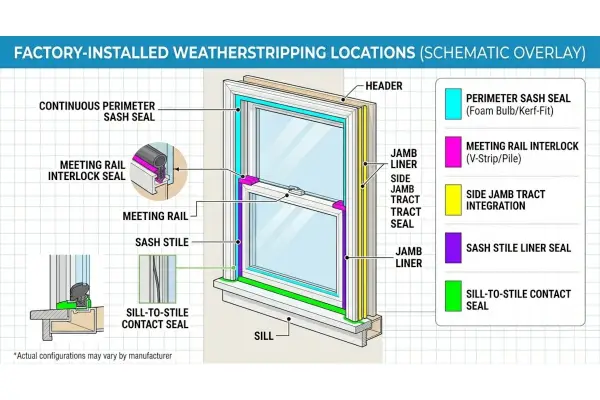
Where Weatherstripping Is Installed in Windows
Different window types use different sealing strategies. A double-hung window, for example, relies on weatherstripping at the jamb tracks, meeting rails, and contact points between the sash and frame. A casement window uses compression-style seals that engage when the sash is pulled tightly against the frame by the locking hardware. Sliding windows often use low-friction seals that can tolerate horizontal motion without excessive drag.
Some of the most common weatherstripping locations in windows include:
- sash-to-frame perimeter contact areas
- meeting rails where operable sash sections come together
- jamb liners or side channels
- sill contact points
- interlock areas on sliding or double-hung units
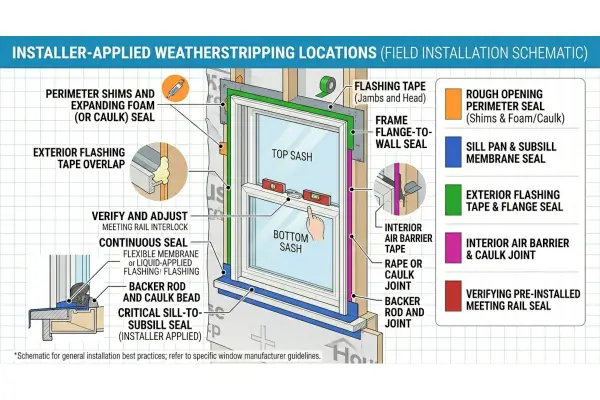
Each of these locations may require a different profile and level of compression. In premium systems, the seal geometry is integrated into the product design. In replacement or adjustment work, installers must confirm that the weatherstripping remains continuous and properly seated after the unit is set, shimmed, and adjusted.
Where Weatherstripping Is Installed in Doors
Doors typically require a more robust sealing strategy than windows because of their larger moving panels, heavier hardware loads, and more frequent use. A standard exterior door system may include perimeter weatherstripping along the side jambs and head, plus a bottom sweep or gasket that interacts with the threshold. Double doors may also include astragal sealing components where the slabs meet.
Common weatherstripping locations in doors include:
- jamb kerf-in seals
- head seals
- door bottom sweeps
- threshold contact gaskets
- astragal seals on paired doors
Because a door relies on hinges, latching pressure, threshold alignment, and frame squareness, even a good seal can fail if the slab is not hanging correctly. Installers must verify that contact is even around the perimeter and that the latch engages without forcing the panel too tightly against one area while leaving another area loose.
Common Weatherstripping Materials Used in Modern Systems
Not all weatherstripping materials perform the same way. The best option depends on the type of unit, the design of the seal channel, the amount of movement, the required compression, and long-term durability expectations. Professional-grade products typically rely on engineered materials that can maintain shape and flexibility over time.
EPDM Rubber
EPDM is one of the most common and trusted weatherstripping materials used in quality window and door systems. It remains flexible across a wide temperature range and is known for durability, resilience, and stable long-term performance. When properly designed into a system, EPDM can provide reliable compression without becoming brittle or permanently flattened too quickly.
This material is frequently used in compression seals around operable windows and doors. It is especially well suited to perimeter sealing applications where repeated movement and weather exposure are expected.
Silicone Seals
Silicone-based seals are often found in higher-end systems because of their elasticity and long service life. They can perform very well where consistent flexibility is needed and where the seal profile must recover after repeated compression. Premium windows and doors may use silicone weatherstripping in locations where shape retention and smooth engagement are critical.
TPE and Similar Engineered Elastomers
Thermoplastic elastomers and related engineered compounds are also common in modern fenestration systems. These materials can be produced in precise profiles and may offer a good balance of flexibility, manufacturing consistency, and compatibility with specific frame designs. As with other materials, the performance depends on the quality of the profile and how well it matches the intended application.
Brush Seals
Brush seals are commonly used in sliding windows and sliding patio doors where low friction is important. Rather than creating a heavy compression seal, they help manage contact in moving channels and interlocks. Brush weatherstripping is not interchangeable with compression gaskets; it is used where the motion of the panel requires a different approach.
Why Foam Weatherstripping Is Usually Not Recommended
Foam weatherstripping is widely sold as a quick fix, but it is generally not the preferred solution for quality window and door work. It is often used in temporary repairs or light-duty applications, yet it tends to compress permanently, degrade faster, and deliver inconsistent results compared with better materials such as EPDM, silicone, or engineered gasket systems.
Foam products are especially problematic when they are used as a substitute for proper adjustment, proper seal replacement, or proper installation. They may appear to solve a gap visually while doing little to create a controlled, durable sealing line. In some cases, foam strips are installed in locations where they interfere with operation, create uneven pressure, or peel away after a relatively short period of use.
For professional residential installations, foam weatherstripping should generally be discouraged as a long-term solution. If a window or door needs a properly functioning dynamic seal, the correct approach is to use a material and profile designed for that specific assembly, not a generic adhesive foam product chosen only because it is easy to apply.
Installation Techniques Matter as Much as Material Choice
Even the best weatherstripping material will not perform well if it is installed carelessly. Professional installation requires attention to compression, alignment, continuity, and fit. Weatherstripping should not be treated as an afterthought added at the end of the job. It is part of the operating system of the unit.
Correct Compression
The seal must compress enough to create proper contact, but not so much that the unit becomes difficult to open, close, or latch. Under-compression can leave gaps. Over-compression can cause hardware strain, premature wear, difficult operation, and deformation of the seal profile. Good installers understand that seal pressure must be balanced.
Alignment of Operable Components
Windows and doors must be aligned before seal performance can be judged accurately. If a sash is racked, a frame is out of square, or a door slab is hanging unevenly, one part of the seal may be overloaded while another part barely contacts at all. A proper installation sequence includes setting the unit correctly, shimming appropriately, checking reveal lines, and adjusting hardware where needed.
Continuous Seal Lines
One of the most important quality principles is continuity. A high-quality gasket is only effective if it forms an unbroken sealing path. Corners, transitions, joint ends, and meeting points are common failure locations. Installers should pay close attention to cut quality, splices, corner fitment, and the way the material sits in the kerf or channel.
Compatibility With Hardware and Operation
Weatherstripping must work with the actual movement of the unit. Casement locking hardware, sliding rollers, hinge geometry, thresholds, and keeper positions all affect how the seal engages. Installers should never assume that simply adding more material improves performance. In many cases, the better solution is precise adjustment and correct replacement of the original seal profile.
Quality Control Checks During Installation
Professional weatherstripping work should always include quality control. A finished installation should not be judged only by appearance. It should also be checked for continuity, contact, and smooth operation.
Visual Inspection
The installer should inspect whether the weatherstripping is seated fully, follows the intended line, and remains undamaged after installation. Twisted sections, stretched corners, loose ends, and flattened areas should be corrected before the job is considered complete.
Operational Testing
Every operable sash or door panel should be opened, closed, and latched to confirm that the unit moves smoothly and the seal engages consistently. If a unit requires excessive force to close, that may indicate alignment issues or excessive seal pressure. If the panel feels loose or inconsistent, the seal may not be contacting uniformly.
Perimeter Contact Review
Installers should check that compression is reasonably even around the perimeter. A door that seals tightly at the top but lightly near the latch side, or a window sash that binds on one side while floating on the other, indicates a problem that should be corrected before completion.
Corner and Transition Review
Corners are frequent weak points in weatherstripping systems. Good quality control includes checking transitions at mitered or joined sections, verifying that no small gaps were left at intersecting profiles, and making sure seal ends are properly terminated.
Signs That Weatherstripping Needs Replacement or Correction
Over time, weatherstripping can wear, flatten, detach, crack, or lose resilience. In some cases, the material itself is still usable, but the unit has shifted enough that the seal no longer engages correctly. Common signs of trouble include visible damage to the gasket, uneven contact around the perimeter, worn door sweeps, loose kerf-in seals, or areas where the unit no longer closes with consistent resistance.
It is also important to understand that visible wear is not the only problem. Sometimes the real issue is frame movement, hinge wear, poor original installation, or hardware misadjustment. Replacing the seal without correcting the underlying alignment issue may not solve the problem. That is why experienced installers inspect the whole assembly rather than focusing on the weatherstripping alone.
Why Installation Quality Determines Long-Term Performance
Weatherstripping cannot compensate for every installation defect. If a window or door is installed out of square, if shimming is inadequate, if hardware is not adjusted correctly, or if the frame geometry is compromised, even premium seals may wear unevenly and lose effectiveness sooner than expected. The durability of the sealing system depends on the quality of the installation as a whole.
This is one reason professional window and door installation matters so much. Proper weatherstripping performance is not just about selecting a good material. It requires accurate installation, proper alignment, careful finishing, and a quality-control process that verifies the seal actually works as intended.
Professional Weatherstripping Starts With the Right System
The best results usually come from using weatherstripping that matches the design of the window or door system rather than relying on improvised aftermarket fixes. Engineered seals, properly installed and properly adjusted, provide better fit, better durability, and more consistent operation. By contrast, shortcut materials such as generic adhesive foam strips often create only the appearance of a repair without delivering the precision expected in a professional installation.
For homeowners evaluating windows and doors, weatherstripping should be viewed as an important quality component, not a minor accessory. The right seal profile, the right material, and the right installation technique all contribute to the way the unit closes, feels, and performs over time.
At WarmDreams Windows And Doors, careful attention to seal placement, frame alignment, operation, and finishing is part of professional installation quality. If your windows or doors show signs of worn seals, uneven closing, damaged sweeps, or poor perimeter contact, a proper inspection can help determine whether the solution is adjustment, seal replacement, or a more comprehensive correction of the assembly.
Request your free in-home estimate today.
Recent Posts
- Low-E Glass: Choosing the Right Window Coating
- From Ancient Doors to Modern Entry Systems: What 1,700 Years of Engineering Teach
- Service Areas: Where WarmDreams Windows & Doors Operates
- Top 2026 Window & Door Trends: Colors, Materials, Smart Hardware & Energy Efficiency
- Best Window Company Near Me & the Average Cost of New Windows