
Understanding Low-E Glass: LoE i89 vs. LoE i270. Choosing the Right Window Coating for Your Home
Many homeowners while shoping for new windows, focus on the frame — the color, the material, whether it's wood, vinyl, or fiberglass. But the glass itself, and more specifically the invisible coating applied to it, may be one of the most important factors in how your windows perform over the next 20-30 years.
Modern energy-efficient windows incorporate a technology called Low-E glass. This is a glass with a thin metallic coating applied that controls how heat and light move through the pane. Two of the most widely used coatings in today's residential windows are LoE i89 and LoE i270, both manufactured by Cardinal Glass Industries.
What Is an Insulating Glass Unit (IGU)?
Before diving into coatings, it helps to understand the structure of a modern window pane. Most energy-efficient windows today don't use a single sheet of glass — they use an Insulating Glass Unit, commonly abbreviated as IGU.
An IGU is an assembly of two or three panes of glass sealed together with a spacer between them. The space between the panes is filled with an inert gas (typically argon or krypton), which conducts heat far less efficiently than air. The result is slowing the transfer of heat dramatically compared to a single pane of glass.
But the gas fill and the multi-pane construction are only part of the equation. The surface of the glass itself can be coated to further control how heat in the form of infrared radiation (radiant energy) passes through or reflects away from the window. That's where Low-E coatings come in.
What Is Low-E Glass?
"Low-E" stands for low emissivity. Emissivity is a measure of how readily a surface radiates heat. A surface with high emissivity releases heat easily; a surface with low emissivity holds heat in and reflects radiant energy away.
Low-E glass has a microscopically thin coating — typically composed of silver and metal oxide layers — applied to one or more surfaces of the glass pane. This coating is so thin that it is invisible to the naked eye and does not meaningfully affect the clarity or color of the glass. Yet it dramatically changes how the window handles radiant energy.
Low-E coatings perform two related but distinct jobs depending on the season:
- In winter, they reflect interior heat back into the room, reducing the amount of warmth that escapes through the IGU.
- In summer, they reflect solar infrared radiation away from the glass before it enters your home, reducing heat gain and the load on your air conditioning system.
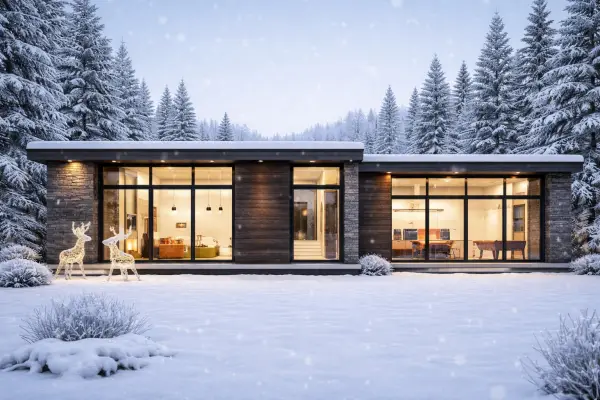
All modern ENERGY STAR-certified windows use some form of Low-E coating. But not all Low-E coatings are the same and the difference between a high solar gain coating and a low solar gain coating is significant enough to affect your comfort and energy bills for decades.
LoE i89 and LoE i270 coatings
Cardinal Glass Industries is one of the largest manufacturers of insulating glass in North America, and their LoE product line is found in windows from many leading brands including Andersen, Pella, and Marvin. Their coatings are identified by a naming convention that reflects their performance characteristics.
The "i" in LoE i89 and LoE i270 indicates that the coating is applied to an interior glass surface — specifically the inner face of the outer pane in a double-pane IGU. This placement is deliberate: it positions the coating where it can do the most work reflecting radiant energy while being protected from weathering and cleaning on the exterior.
The numbers — 86 and 270 — correspond to the coating's optical and thermal properties. Broadly speaking, a higher number in the LoE line indicates more solar control (less heat passing through), while a lower number allows more solar energy to enter.
These two coatings represent Cardinal's two most commonly specified residential options, and they're engineered for different climatic conditions and performance goals.
LoE i89 — A Closer Look
LoE i89 is a high solar gain Low-E coating. It is designed to allow a meaningful amount of solar heat to pass through the glass while still providing excellent insulating performance and UV protection.
How It Performs
LoE i89 achieves a relatively high Solar Heat Gain Coefficient (SHGC) — a measure of how much solar radiation passes through a window as heat. A higher SHGC means more of the sun's warmth enters your home. For LoE i89 in a standard double-pane IGU with argon fill, the SHGC typically falls in the range of 0.27 to 0.35 depending on the window frame and configuration.
Its U-Factor — which measures how quickly a window loses heat to the outside — is low, typically in the range of 0.28 to 0.32. A lower U-Factor means better insulating performance.
Visible light transmittance (VLT) is high with LoE i89, meaning windows feel bright and clear. UV reflection is also strong, blocking the majority of ultraviolet radiation that causes fading in fabrics, flooring, and furnishings.
When Should Choose LoE i89
LoE i89 is the right choice for homeowners in cold and heating-dominated climates — typically the northern United States, Canada, and regions where winters are long and heating costs are a primary concern. In these climates, allowing passive solar heat gain through south-facing windows in winter is a genuine advantage. The warmth from the sun supplements your heating system, reducing energy use and increasing comfort.
It is also well-suited for:
- North-facing windows in any climate, where solar gain is minimal year-round and insulation is the priority
- Homes designed around passive solar principles
- Rooms where natural light and warmth are desired, such as sunrooms or living spaces
LoE i89 keeps your home's heat inside while still welcoming the free warmth the sun provides on cold, clear days.
LoE i270 — A Closer Look
LoE i270 is a low solar gain Low-E coating. It is engineered to reject a greater proportion of solar heat while still delivering excellent visible light transmittance and strong insulating performance.
How It Performs
LoE i270 has a lower SHGC than i89, typically falling in the range of 0.19 to 0.27 in a standard double-pane configuration. This means it allows less solar heat into the home — a meaningful advantage where air conditioning costs dominate.
Its U-Factor is comparable to i89, typically in the range of 0.28 to 0.32. Where it differentiates itself is in solar control: it reflects more infrared radiation from the sun, reducing the heat that builds up inside the home on warm, sunny days.
Visible light transmittance remains good with LoE i270 — rooms don't feel noticeably darker — but UV reflection is excellent, often blocking over 95% of ultraviolet radiation.
When To Choose LoE i270
LoE i270 is the right choice for homeowners in hot or mixed climates, where air conditioning runs for a significant portion of the year. It is also an excellent choice for any window orientation that receives direct afternoon sun, regardless of climate.
It is particularly well-suited for:
- South- and west-facing windows, which receive the most intense solar exposure
- Rooms that overheat easily, such as west-facing bedrooms or kitchens with afternoon sun
- Homes where protecting interior furnishings from UV fading is a priority
If you live where cooling your home is expensive, or if certain windows in your home take a beating from afternoon sun, LoE i270 acts as a thermal shield. It keeps solar heat out while still letting in the natural light that makes a home feel open and inviting.
The single most useful question to ask yourself when choosing between these two coatings is: Do I spend more money heating my home or cooling it? If heating dominates, lean toward i89. If cooling dominates, lean toward i270. If you're genuinely in the middle — a mixed climate with real winters and real summers — i270 is often the safer default, particularly for south- and west-facing windows.
Other Factors That Influence Your Choice
Climate zone and heating vs. cooling costs are the primary drivers of coating selection, but several other factors are worth considering.
Window Orientation
Even in a cold climate, a west-facing window may benefit from a low solar gain coating like i270 because afternoon sun in summer can create uncomfortable heat buildup regardless of your annual heating load. Conversely, a north-facing window in any climate rarely receives direct sun, making the solar gain difference between i89 and i270 largely irrelevant — in that case, U-Factor and insulation performance matter more.
Room Function
A sunroom or breakfast nook designed around morning light and warmth may benefit from i89 even in a warmer climate. A home office or bedroom on the west side of the house may benefit from i270 regardless of climate zone, simply to reduce afternoon glare and overheating.
Mixing Coatings
It is entirely reasonable — and often advisable — to specify different coatings for different windows in the same home. A well-designed window package might use LoE i89 on north-facing windows for maximum insulation and LoE i270 on south- and west-facing windows for solar control. This approach tailors performance to the actual sun exposure of each opening.
Triple-Pane Options
Both LoE i89 and LoE i270 are available in triple-pane IGU configurations. Adding a third pane and a second Low-E coating — often Cardinal's LoE-366 on Surface 4 — dramatically improves both U-Factor and solar control. Triple-pane windows are increasingly common in cold climates and in high-performance or Passive House construction.
Energy Efficiency and ENERGY STAR Certification
Both LoE i89 and LoE i270 can be used in windows that achieve ENERGY STAR certification, though the specific product configuration — frame material, gas fill, pane count, and coating selection — determines whether any given window qualifies for a particular climate zone rating.
ENERGY STAR certifies windows by climate zone using U-Factor and SHGC thresholds. For northern zones, ENERGY STAR allows higher SHGC values (making i89 a natural fit). For southern zones, it requires lower SHGC values (making i270 the appropriate choice). Selecting the right coating for your climate zone is therefore not just a comfort decision — it's a factor in whether your windows qualify for ENERGY STAR status and any associated rebates or tax credits.
From a real-world savings perspective, upgrading from clear glass to a quality Low-E coating can reduce the energy lost or gained through windows by 30 to 50 percent, depending on your existing windows and climate. Given that windows can account for 25 to 30 percent of residential heating and cooling energy use, the cumulative impact over the life of a window is substantial.
UV Protection and Interior Preservation
Energy performance tends to dominate the conversation around Low-E glass, but ultraviolet protection deserves equal attention — particularly for homeowners with hardwood floors, area rugs, upholstered furniture, artwork, or any interior finishes that are sensitive to fading.
UV radiation is the primary driver of fading and material degradation in interior spaces. Standard clear glass blocks very little UV. Low-E coatings, by contrast, are highly effective UV filters — LoE i89 blocks a significant majority of UV radiation, and LoE i270 blocks even more, often in excess of 95 percent.
This means that beyond the heating and cooling benefits, Low-E windows act as a long-term preservative for everything inside your home that sits near a window. Hardwood floors that might fade noticeably within a few years near an uncoated window can retain their finish for decades behind LoE glass. The same applies to furniture upholstery, curtains, photographs, and any other light-sensitive materials.
For homeowners who have invested in quality interior finishes, this UV protection alone can justify the upgrade to Low-E glass.

Frequently Asked Questions
Can I use different coatings on different windows in the same home?
Does Low-E glass look different from regular glass?
Does the coating affect the window warranty?
How do I know what coating is already in my existing windows?
Is one coating better than the other overall?
The Right Glass for Your Climate, Your Home, Your Future
Windows are a long-term investment. The ones you install today will likely be in place for 20, 30, or even 40 years. The glass coating inside those windows — invisible, weightless, and often overlooked — will be quietly working the entire time, either helping your heating and cooling systems do their job or making them work harder than they should.
If you are comparing window options and want a clearer recommendation on the right glass package for your home, schedule a consultation. The right guidance can help you avoid expensive compromises and choose windows that feel better every day, not just on paper.
Our specialists help homeowners choose the right window systems and Low-E glass packages for their climate, home orientation, and comfort goals.
- Energy-efficient insulated glass units
- Professional installation
- Windows designed for Midwest climates
Request your free in-home estimate today.
Recent Posts
- From Ancient Doors to Modern Entry Systems: What 1,700 Years of Engineering Teach
- Service Areas: Where WarmDreams Windows & Doors Operates
- Top 2026 Window & Door Trends: Colors, Materials, Smart Hardware & Energy Efficiency
- Best Window Company Near Me & the Average Cost of New Windows
- Illinois Window & Door Manufacturers: Complete Guide for Homeowners & Contractors