From Ancient Roman Doors to Modern Chicago Entry Systems: What 1700 Years of Engineering Teach
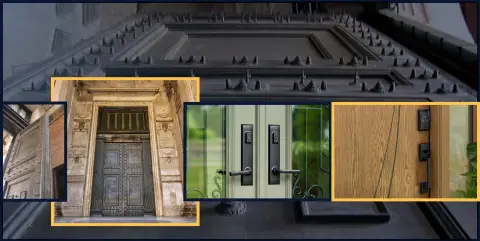
Some doors survive for centuries. One Roman wooden door has lasted nearly 1,700 years. Massive bronze doors in Rome have functioned for almost two millennia. These examples were not built with modern insulation standards, weather seals, or energy codes in mind — yet they endured.
Understanding why they lasted reveals something important: durability is never accidental. It is the result of material choice, structural logic, environmental context, and proper installation. Those same principles still apply today, especially in climates like Chicago and its suburbs, where entry doors must withstand freeze–thaw cycles, wind-driven precipitation, and wide seasonal temperature swings.
The Zurich Roman Door: Strength Through Material and Simplicity
The Zurich Roman Door is one of the oldest surviving wooden doors in the world. Constructed in the Roman era, it was built using thick timber planks reinforced with iron straps and simple joinery.
Its longevity can be attributed to several factors:
- Material mass: thick hardwood sections resist deformation and wear.
- Structural simplicity: fewer mechanical components reduce failure points.
- Reinforcement: iron straps distribute loads and limit splitting.
- Environmental protection: stable exposure conditions limited moisture cycling.
Ancient builders relied on density and reinforcement rather than precision sealing or layered assemblies. The door was built to remain structurally sound, but not to maintain interior thermal comfort.
Monumental Durability: The Bronze Doors of the Pantheon
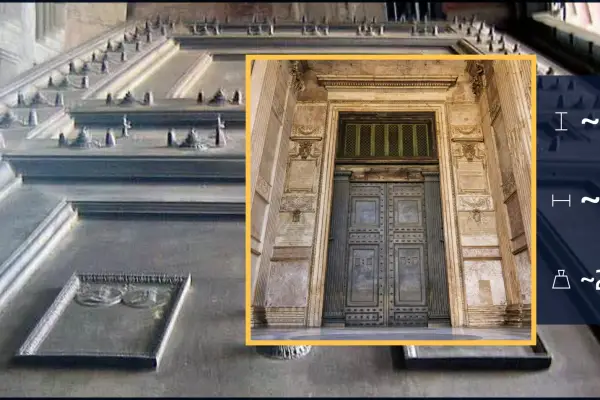
At a much larger scale, the Pantheon’s bronze doors demonstrate a similar principle. Bronze — an alloy of copper and tin — naturally resists corrosion and forms a protective patina over time. Combined with robust pivot systems and installation within thick masonry walls, the doors have endured for centuries.
These examples show that durability begins with appropriate materials and thoughtful structural integration. However, neither wooden nor bronze Roman doors were designed to manage air infiltration, thermal bridging, or modern security standards.
How Performance Expectations Have Changed
Modern residential entry doors must address challenges that ancient doors never encountered:
- Thermal performance and insulation.
- Air infiltration control.
- Water intrusion management.
- Expansion and contraction from temperature swings.
- Code-compliant structural anchoring.
- Contemporary security requirements.
In the Chicago area, these factors are intensified by winter conditions. Repeated freeze–thaw cycles can stress materials. Snow accumulation at thresholds increases moisture exposure. Wind pressure exposes gaps in air sealing. Humidity shifts affect wood movement.
Durability today requires not only strong materials, but performance engineering.
Modern Entry Systems: Engineering Over Mass
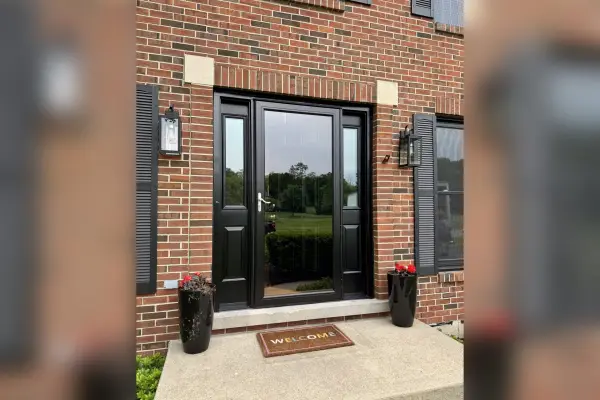
Rather than relying on thickness alone, modern entry systems use layered construction and tested assemblies. Manufacturers such as ProVia design entry doors as integrated systems — door slab, frame, weatherstripping, threshold, glass, and hardware working together.
Common engineering features include:
- Fiberglass or steel exteriors that resist warping and surface deterioration.
- Insulated cores that improve thermal resistance.
- Composite frame components designed to resist moisture-related damage.
- Compression weather seals to reduce air infiltration.
- Reinforced lock zones for improved security.
Unlike ancient doors, modern entry systems are evaluated using measurable performance standards: air infiltration rates, thermal ratings, and structural load resistance.
The Role of Installation in Long-Term Performance
Material selection alone does not guarantee longevity. Installation determines whether a door performs as designed.
Roman doors were integrated into thick masonry walls that provided structural stability and natural mass. Contemporary residential constructions — particularly wood-framed homes common throughout Chicagoland — require a different approach.
Proper installation should address:
- Correct alignment and structural anchoring.
- Flashing details that direct water away from the opening.
- Insulation around the frame to reduce thermal bridging.
- Air sealing to prevent drafts.
- Threshold and sill protection against moisture intrusion.
In Midwest climates, improper installation often leads to drafts, sticking doors, premature wear, and water-related damage. Performance depends on both engineering and execution.
Engineering Lessons That Still Apply
Ancient doors teach enduring principles:
- Choose materials appropriate for the environment.
- Simplify structural load paths.
- Reinforce areas under stress.
- Integrate the door properly into the surrounding structure.
Modern entry systems apply these principles using advanced materials and building science. Instead of relying solely on mass, they rely on precision, layered construction, and controlled sealing.
Entry Door Considerations for Chicago and Suburbs
Homes in communities such as Arlington Heights, Schaumburg, Palatine, Mount Prospect, Elk Grove Village, Buffalo Grove, Wheeling, Des Plaines, Hoffman Estates, and Barrington experience significant seasonal variation. Entry doors in this region benefit from:
- Stable, moisture-resistant materials.
- High-quality weather sealing systems.
- Proper flashing and installation techniques.
- Hardware reinforced for long-term use.
When material selection and installation are aligned with climate realities, entry doors can provide decades of reliable performance.
From Antiquity to Modern Practice
The Zurich Roman Door survived because it was built with intention and reinforced appropriately for its time. The bronze doors of the Pantheon endure because material choice matched environmental exposure.
Today, the same intentional thinking applies to residential entry systems. Longevity is achieved not through excess weight, but through thoughtful engineering, tested materials, and precise installation suited to local conditions.
Understanding these principles helps homeowners make informed decisions, ensuring that an entry door performs reliably for many years to come.
Frequently Asked Questions About Entry Doors in Chicago and Suburbs
What is the best entry door material for Chicago winters?
How long should a front door last in the Midwest?
Does installation quality really affect energy efficiency?
Why is my front door drafty even though it looks fine?
What causes water at the threshold or inside near the entry door?
Are fiberglass entry doors better than wood in Illinois?
What are the signs it’s time to replace an entry door?
Recent Posts
- Low-E Glass: Choosing the Right Window Coating
- Service Areas: Where WarmDreams Windows & Doors Operates
- Top 2026 Window & Door Trends: Colors, Materials, Smart Hardware & Energy Efficiency
- Best Window Company Near Me & the Average Cost of New Windows
- Illinois Window & Door Manufacturers: Complete Guide for Homeowners & Contractors